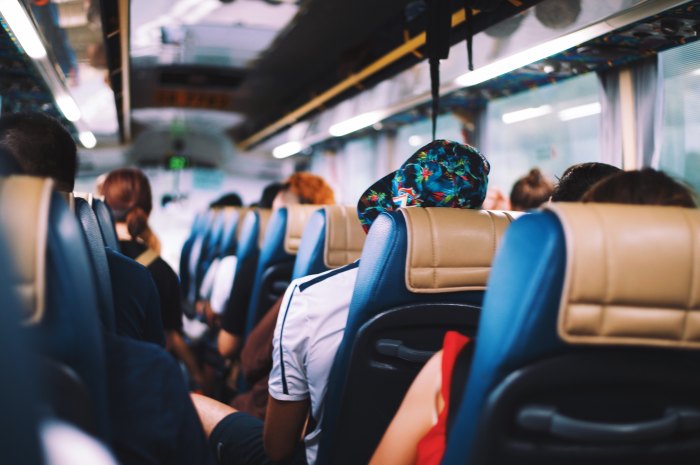
Navigating unfamiliar public transportation systems can be daunting, but it’s often the most efficient and cost-effective way to explore a new country. This guide provides a comprehensive overview of how to confidently use public transport abroad, from pre-trip planning and understanding local systems to safety precautions and travel hacks. We’ll cover everything from purchasing tickets and utilizing apps to staying safe in crowded situations and even capturing stunning travel photos along the way.
Prepare to unlock a smoother, more enriching travel experience.
Whether you’re venturing to bustling European capitals or exploring vibrant Asian cities, mastering public transportation is key to unlocking authentic cultural immersion and maximizing your travel budget. This guide equips you with the knowledge and strategies to navigate diverse transportation networks with ease and confidence, transforming potential anxieties into exciting adventures.
Travel Hacks for Public Transportation
Navigating public transport abroad can be daunting, but with a few clever strategies, you can make it a smooth and affordable experience. This section will explore practical tips and tricks to save money, optimize your journeys, and maximize your use of available resources. We’ll cover everything from leveraging technology to understanding local loyalty programs.
Saving Money on Public Transportation
Reducing transportation costs is crucial for budget travelers. Several methods exist to significantly lower your expenditure. Consider purchasing multi-day or weekly passes instead of individual tickets; these often offer substantial discounts compared to single-journey fares. Look for tourist passes that bundle public transport with entry to attractions, providing excellent value. Walking or cycling for shorter distances, especially in cities with good bike infrastructure, can save you money and offer a more immersive experience.
Finally, investigate local discounts – some cities offer reduced fares for students, seniors, or those with specific identification. For example, many European cities offer discounted fares for children or young adults.
Finding the Fastest and Most Efficient Routes
Efficient route planning is key to maximizing your time. Utilize online route planners and transportation apps, which often provide real-time updates on schedules and potential delays. These tools frequently incorporate multiple modes of transportation, suggesting the fastest combination of buses, trains, subways, and trams. Before your trip, familiarize yourself with the local transportation map; understanding the main lines and hubs will help you navigate intuitively, even without constant reliance on apps.
For example, using Google Maps’ public transportation feature in a city like London will provide detailed step-by-step directions, including estimated travel times and platform information.
Utilizing Local Transportation Apps and Websites
Mastering local transportation apps and websites is essential for seamless travel. Many cities have dedicated apps that provide real-time information, schedules, ticket purchasing options, and even fare calculations. These apps are often integrated with mapping services, making route planning incredibly convenient. For example, the Citymapper app is widely used across numerous international cities, providing comprehensive information on public transport networks.
Websites often offer similar information, though apps tend to be more user-friendly for on-the-go navigation. Always ensure you’re using official sources to avoid inaccurate or outdated information.
Leveraging Loyalty Programs and Discounts
Many public transportation systems offer loyalty programs or discounts for frequent users. These programs often provide benefits such as reduced fares, free travel on certain days, or access to exclusive perks. Check the website of the local transportation authority before your trip to see if such programs exist. For example, some cities offer discounted monthly or annual passes for regular commuters, significantly reducing the overall cost of transportation over time.
Consider whether the frequency of your travel justifies the investment in a loyalty program.
Travel Insurance and its Role in Public Transportation
Navigating public transportation abroad can be exciting, but unforeseen circumstances can quickly turn a pleasant journey into a stressful ordeal. Travel insurance plays a vital role in mitigating these risks, providing financial protection and peace of mind when unexpected events occur while using public transport. A comprehensive policy can offer significant support in managing situations ranging from minor delays to serious accidents.Travel insurance that specifically covers incidents related to public transport offers crucial protection against a range of potential problems.
This coverage typically includes compensation for missed connections due to delays, expenses incurred due to accidents on public transport, and even medical expenses if an accident occurs while using buses, trains, subways, or trams. Understanding the specifics of your policy and knowing how to file a claim are key to maximizing its benefits.
Filing a Travel Insurance Claim Related to Public Transportation
To successfully file a claim, you should meticulously document all relevant information immediately following the incident. This includes gathering evidence such as tickets, boarding passes, police reports (if applicable), medical bills, and photographic evidence of any injuries or damage. Contact your insurance provider as soon as possible, ideally within the timeframe specified in your policy. They will guide you through the claims process, providing the necessary forms and instructions.
Be prepared to provide detailed accounts of the events leading up to the incident, the incident itself, and the subsequent consequences. Accurate and thorough documentation is essential for a smooth and successful claim process. Failing to do so can lead to delays or even rejection of your claim.
Comparison of Travel Insurance Plans and Public Transportation Coverage
Travel insurance plans vary significantly in their coverage for public transportation incidents. Basic plans might only offer minimal coverage for trip interruptions, while more comprehensive policies offer broader protection, including medical expenses, baggage loss, and even legal assistance in the event of an accident. Higher-tier plans often include higher coverage limits and fewer exclusions. For example, a budget plan might only cover delays exceeding a certain number of hours, while a premium plan may cover even minor delays resulting in missed connections.
Carefully comparing policies from different providers and understanding the specific terms and conditions is crucial to finding the right level of protection for your needs and travel style. Consider the frequency and types of public transport you intend to use, as this will influence the level of coverage you require.
Examples of Situations Where Travel Insurance is Crucial
Consider a scenario where a tourist is involved in a bus accident while traveling abroad. Medical expenses in a foreign country can be exorbitant, and without travel insurance, the individual could face significant financial burdens. Travel insurance would cover these medical costs, ensuring access to necessary treatment without the added stress of substantial financial implications. Another example involves a significant train delay causing the tourist to miss an international flight.
Rebooking the flight can be expensive, but comprehensive travel insurance would typically cover these costs, preventing further financial strain. Finally, if a tourist’s luggage is lost or damaged on a public transport vehicle, travel insurance can provide compensation for the replacement of essential items and clothing, alleviating the inconvenience and expense. These examples illustrate how travel insurance can provide invaluable support in various situations involving public transportation, protecting both financial well-being and peace of mind.
Capturing Your Journey
Public transportation offers a unique perspective on a city, a window into the daily lives of its inhabitants. Capturing this essence through photography requires more than just pointing and shooting; it demands a keen eye for detail and an understanding of light, composition, and the right moment. This section explores techniques for transforming your public transport experiences into compelling visual narratives.
Optimal Times for Photography
The time of day significantly impacts the mood and quality of your photographs. Golden hour, the period shortly after sunrise and before sunset, casts a warm, soft light ideal for highlighting architectural details and creating a sense of nostalgia. Conversely, the “blue hour,” the twilight period just before sunrise and after sunset, offers a cooler, more dramatic palette, perfect for capturing the city’s nocturnal energy.
Midday sun, while harsh, can be utilized creatively by employing techniques like backlighting to create silhouettes or using shade to avoid overexposure. Consider the specific atmosphere you want to convey when choosing your shooting time. For example, capturing a bustling morning commute requires a different approach than photographing a quiet evening tram ride.
Camera Settings for Dynamic Images
Mastering your camera’s settings is crucial for capturing dynamic images. Experiment with aperture to control depth of field; a wide aperture (low f-number, e.g., f/1.8) will blur the background and emphasize your subject, while a narrow aperture (high f-number, e.g., f/16) will keep everything in sharp focus. Shutter speed determines motion blur; a fast shutter speed (e.g., 1/500s) freezes action, while a slower shutter speed (e.g., 1/30s) can create a sense of movement, ideal for capturing the blur of passing scenery from a moving train.
ISO controls sensitivity to light; lower ISO (e.g., 100) produces cleaner images in bright conditions, while higher ISO (e.g., 3200) is necessary in low light, but can introduce noise. Finding the right balance between these settings will allow you to capture the essence of your journey effectively.
Creative Composition Techniques
Creative composition elevates your photographs from snapshots to works of art. Consider the rule of thirds, placing your subject off-center for a more visually appealing image. Leading lines, such as train tracks or roads, can draw the viewer’s eye into the scene. Symmetry and patterns, often found in the architecture of train stations or the repetition of carriages, can create visually striking images.
Experiment with different angles; shooting from a low vantage point can create a dramatic perspective, while a high vantage point can offer a sweeping view of the cityscape. For example, a photograph of a vintage tram in Lisbon, Portugal, could be composed using leading lines of the cobblestone streets, emphasizing the tram’s curves and the vibrant colors of the surrounding buildings.
Conversely, a photograph of a futuristic subway station in Seoul, South Korea, could showcase the clean lines and geometric patterns through a symmetrical composition, highlighting the technological advancement.
Travel Visa Requirements and Public Transport Access
Navigating public transportation while traveling internationally is significantly impacted by your visa status. The type of visa you hold, or even the lack thereof, directly influences your access to and ease of using various transportation modes within a country. Understanding these implications is crucial for efficient and stress-free travel planning.Obtaining necessary travel visas involves a process that varies considerably depending on your nationality and your destination country.
This typically includes completing an application form, providing supporting documentation (such as proof of accommodation and onward travel), paying visa fees, and potentially attending an interview at an embassy or consulate. The processing time for visa applications can range from a few days to several weeks, sometimes even months, so applying well in advance is highly recommended. The specific requirements are clearly Artikeld on the website of the relevant embassy or consulate.
Failure to secure the appropriate visa can lead to significant travel disruptions, including being denied entry or deported.
Visa Restrictions and Public Transport Accessibility
Visa restrictions can significantly limit access to public transportation. For example, a tourist visa might restrict your travel to specific regions within a country, thereby limiting your use of national rail networks or long-distance bus services. Transit visas, designed for travelers passing through a country without entering, often come with even stricter limitations on movement and therefore on public transport use.
Some countries might require specific permits or registrations for using certain modes of public transport, such as high-speed trains, which may not be easily obtainable with a standard tourist visa. Furthermore, a lack of appropriate documentation might cause delays or refusal of service at checkpoints within the public transport system.
Comparative Analysis of Visa Requirements and Public Transport Access
The impact of visa requirements on public transport access varies widely across countries. In countries with robust and well-connected public transport networks, like Japan or Germany, even a tourist visa usually provides ample opportunity to utilize various transport options. However, in countries with less developed or more restrictive public transport systems, or those with stringent visa regulations, access might be considerably more limited.
For instance, obtaining permission to travel beyond designated tourist areas in some countries may require additional permits, which can be challenging to secure alongside a standard tourist visa. Similarly, access to certain areas, and therefore to connecting public transport, might be restricted for individuals holding specific visa types.
Examples of Visa Restrictions Impacting Travel Plans
Imagine a traveler planning a backpacking trip across Southeast Asia, relying heavily on buses and trains. If their visa for a specific country only permits them to stay in a limited region, they might be unable to reach their intended destinations via public transport. Similarly, a researcher traveling to conduct fieldwork in a remote area might need a special research visa, which could influence their access to local transportation options.
Another scenario might involve a business traveler with a short-term business visa who needs to travel to a different city for a meeting, but their visa might not permit them to use long-distance high-speed rail services, forcing them to rely on less efficient alternatives. Finally, failure to obtain a visa entirely could prevent any use of public transport within the destination country.
Urban Escapes and Vacation Packages Utilizing Public Transport
Embracing public transportation for city breaks offers a unique blend of affordability, sustainability, and immersion in local life. This approach allows travelers to experience a destination’s rhythm and discover hidden gems often missed by those reliant on taxis or rental cars. By strategically planning routes and utilizing various public transit options, you can create a memorable and budget-friendly urban escape.
This section explores the advantages and challenges of using public transport for urban exploration, provides a sample itinerary, compares different vacation packages centered around public transport, and offers advice on creating a cost-effective city break.
Sample City Break Itinerary: Amsterdam
This itinerary focuses on a three-day trip to Amsterdam, relying solely on public transport (trams, buses, and metro). Amsterdam’s excellent public transport system makes it ideal for this type of travel.
Day 1: Arrive at Schiphol Airport (AMS). Take the direct train to Amsterdam Centraal Station (approx. 15 minutes). Check into your hotel near the station. Afternoon: Explore the Canal Ring by taking tram 2 or
5.
Evening: Enjoy dinner in the Jordaan district, accessible by tram 1, 2, or 5.
Day 2: Morning: Visit the Anne Frank House (book tickets well in advance!). The house is a short walk from Westermarkt, easily reached by tram. Afternoon: Explore the Vondelpark, accessible by various trams and buses. Evening: Take a canal cruise (many depart near Centraal Station).
Day 3: Morning: Visit the Rijksmuseum (accessible by tram). Afternoon: Explore the Albert Cuyp Market (accessible by tram 4, 12, or 25). Evening: Depart from Amsterdam Centraal Station.
Note: Specific tram and bus numbers and schedules can be found on the GVB (Gemeentelijk Vervoerbedrijf Amsterdam) website or app. Always check for any planned disruptions before your journey.
Comparison of Vacation Packages Utilizing Public Transport
The following table compares three different Amsterdam vacation packages that prioritize public transportation:
| Package Name | Duration | Transportation Included | Price (approx.) |
|---|---|---|---|
| Amsterdam City Explorer | 3 days/2 nights | Public transport (GVB) day pass, airport transfer | €300 – €500 |
| Canal Ring & Museums Package | 4 days/3 nights | Public transport (GVB) week pass, canal cruise | €450 – €700 |
| Amsterdam Budget Break | 3 days/2 nights | Public transport (single tickets), walking tours | €200 – €350 |
Note: Prices are approximate and vary depending on the season, hotel choice, and specific inclusions. These are illustrative examples, and many other packages exist.
Benefits and Drawbacks of Using Public Transport for Urban Exploration
Utilizing public transport for sightseeing offers several advantages. It is generally more affordable than taxis or ride-sharing services, environmentally friendly, and allows for a more immersive experience by exposing you to local life. However, it can be less convenient than private transport, especially when traveling with heavy luggage or visiting multiple destinations in a short time. Public transport schedules may also limit spontaneity, requiring advance planning.
Accessibility for those with mobility issues may also be a concern, depending on the city and its infrastructure.
Planning a Cost-Effective Urban Escape Using Public Transport
To maximize cost-effectiveness, consider purchasing multi-day passes or discounted tickets for public transport. Walk or cycle whenever possible to reduce transport costs and experience the city on foot. Look for free activities like walking tours, exploring parks, and visiting free museums on specific days. Stay in budget-friendly accommodation outside the city center, utilizing public transport to reach attractions.
Pack light to avoid extra baggage fees and utilize local markets for affordable food instead of expensive restaurants. Research free Wi-Fi options to avoid roaming charges.
Venture Capital and the Future of Public Transportation
Venture capital (VC) is playing an increasingly crucial role in shaping the future of public transportation. Significant investments are fueling innovation across the sector, leading to the development and deployment of technologies designed to improve efficiency, accessibility, and the overall passenger experience. This influx of capital is driving a transformation, moving public transit beyond its traditional model and into a more technologically advanced and user-centric era.The infusion of venture capital is accelerating the adoption of technological advancements that are fundamentally altering the landscape of public transportation.
Autonomous vehicles, smart ticketing systems, real-time data analytics, and integrated mobility platforms are just a few examples of innovations being rapidly developed and implemented, thanks in large part to VC funding. These technologies are not only improving the efficiency and effectiveness of existing systems but also creating entirely new possibilities for how people move around urban areas.
Technological Advancements Transforming Public Transport
The integration of autonomous vehicles promises to revolutionize public transport. Self-driving buses and shuttles offer the potential for increased efficiency, reduced labor costs, and improved safety. Smart ticketing systems, leveraging mobile technology and contactless payments, streamline the boarding process, reducing wait times and improving overall passenger flow. Real-time data analytics, combined with advanced route optimization algorithms, allows for more efficient service scheduling and resource allocation, leading to improved on-time performance and reduced operational costs.
The development of integrated mobility platforms, which seamlessly connect various modes of transportation (buses, trains, ride-sharing services, etc.), provides passengers with more convenient and flexible travel options. These advancements, many of which are heavily reliant on venture capital investment, are creating a more efficient, convenient, and sustainable public transportation system.
Emerging Trends in Public Transport and Their Impact
Several emerging trends are poised to further reshape the public transportation landscape. Micromobility solutions, such as e-scooters and e-bikes, are increasingly integrated into public transport networks, providing “first/last mile” connectivity and expanding accessibility. The growing adoption of MaaS (Mobility as a Service) platforms offers users a single point of access to various transportation options, simplifying travel planning and payment.
The increasing focus on sustainability is driving the adoption of electric and hydrogen-powered vehicles, reducing the environmental impact of public transport. Furthermore, the use of artificial intelligence (AI) in predictive maintenance and passenger flow management is optimizing resource allocation and enhancing the overall passenger experience. These trends, fueled by continued VC investment, point towards a future where public transportation is more sustainable, efficient, and user-centric.
Examples of Successful Venture-Backed Public Transport Initiatives
Several companies have successfully leveraged venture capital to develop and deploy innovative public transportation solutions. For example, companies developing autonomous shuttle services have secured significant funding to deploy and test their fleets in various cities around the world. Similarly, several companies focusing on smart ticketing and MaaS platforms have attracted substantial VC investment, demonstrating the significant market potential for these technologies.
While specific financial details are often confidential, the sheer number of startups and established companies receiving VC funding in this space speaks to the confidence investors have in the transformative potential of these technologies. These investments are not only fueling technological innovation but also driving the adoption of these solutions at a scale that would be difficult to achieve through traditional public funding alone.
Successfully navigating public transportation abroad enhances your travel experience, allowing for greater exploration and deeper cultural immersion. By utilizing the pre-trip planning strategies, understanding local systems, prioritizing safety, and employing smart travel hacks Artikeld in this guide, you can confidently embrace the efficiency and affordability of public transit. Remember, a little preparation goes a long way in transforming potential travel challenges into rewarding adventures.
Embrace the journey!
Query Resolution
What if I can’t read the local language on signs or announcements?
Download a translation app (like Google Translate) and utilize its camera function to translate signs and announcements in real-time. Many apps also offer offline translation for areas with limited internet access.
How do I handle lost or stolen belongings on public transport?
Report the loss or theft to local authorities immediately. Contact your embassy or consulate if needed for assistance with documentation and recovery. Keep copies of important documents and travel insurance information separately from your valuables.
Are there age or disability discounts on public transport?
Discounts vary by country and transport system. Check the local transportation authority’s website or inquire at ticket counters for details on potential age, disability, or student discounts.
What should I do if I miss my connection?
Remain calm and check the transportation schedules for the next available connection. If necessary, contact customer service for assistance or alternative routing options. Having a backup plan and sufficient travel time built into your itinerary can help mitigate the impact of missed connections.